Choisir des chaussures d’hiver pour enfants
When it comes to choosing winter shoes for children, there are several key considerations that are vital for ensuring warmth, comfort, and safety during the colder months. As temperatures drop, the importance of selecting the right footwear becomes even more critical. Below, we’ll dive into the essential aspects that make the best children’s winter shoes and how you can make an informed choice to keep young feet happy and healthy.
Protection against the elements
One of the primary functions of winter shoes is to provide protection against the harsh weather conditions. Waterproof materials are indispensable ; they prevent snow, slush, and rain from soaking into the shoes, which can lead to damp feet and consequently, increased risk of colds or frostbite. Look for shoes made from materials such as Gore-Tex or similar waterproof fabrics. Additionally, consider shoes with sealed seams to ensure no moisture seeps in through stitching. For areas with heavy snowfall, boots with higher shafts can offer additional protection against snow entering from the top.
Insulation for warmth
In winter, keeping feet warm is as important as keeping them dry. Insulation plays a critical role here. Shoes lined with fleece, Thinsulate, or wool are excellent as they trap heat inside and keep the cold out. Remember, well-insulated shoes do not necessarily need to be bulky. Many modern designs offer warmth without compromising on style or comfort. When selecting shoes, feel the inner lining to ensure it’s thick enough without being cumbersome. Some brands offer removable liners, which can be quite useful for drying and maintaining warmth.
Comfort and fit
Proper fit is crucial. Shoes that are too tight can restrict circulation, reducing warmth, while overly loose shoes could lead to blisters or tripping. It’s important to try on shoes with the type of socks your child will likely wear during winter. Opt for adjustable straps or laces that offer a snug fit and can accommodate the thickness of winter socks. Consider going half a size up to allow for thicker socks if necessary. Encourage your child to walk around in the shoes to ensure they don’t slip at the heel or squeeze the toes.
Sole traction
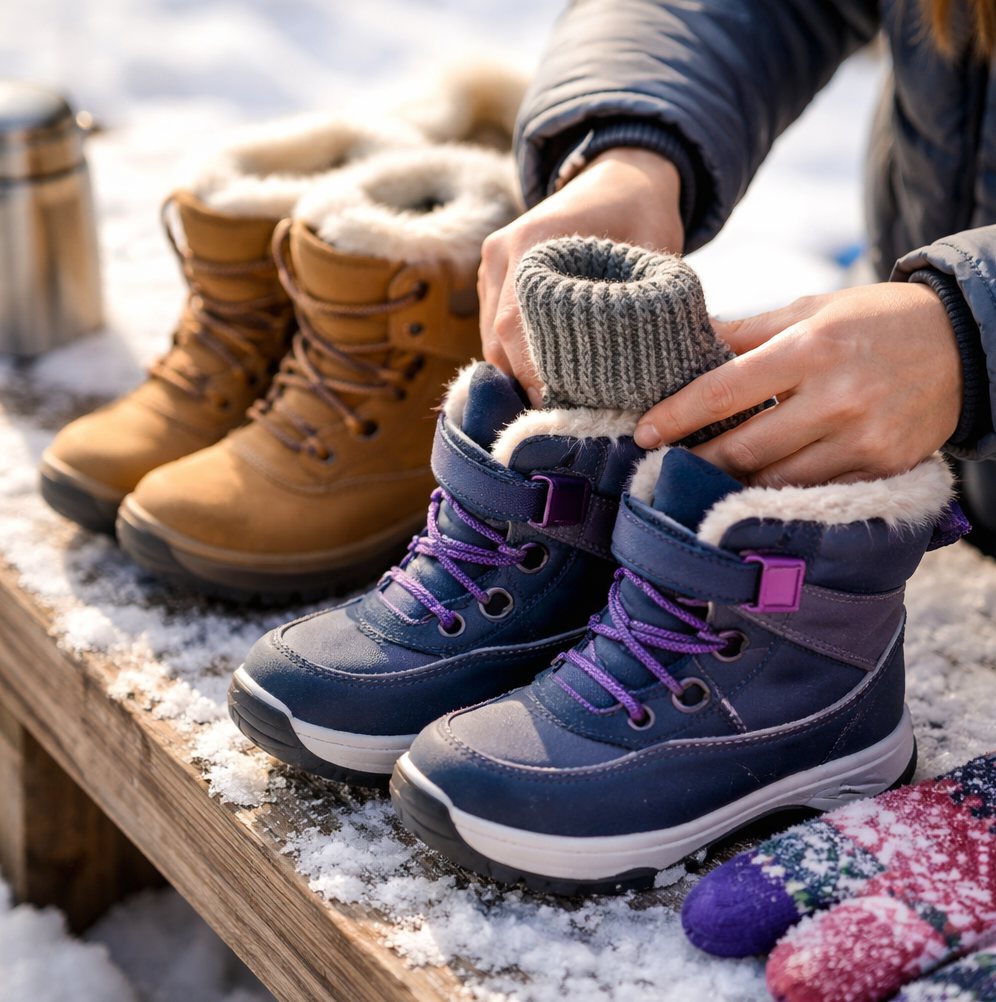 Winter surfaces can be slippery, so good traction is vital. Shoes with rubber soles and deep treads offer the best grip on snowy or icy surfaces. This helps in preventing slips and falls, which are common in winter. A sole with varied tread patterns can provide better grip than flat surfaces. Make sure to examine the sole flexibility as well, since a sole that’s too rigid might not grip well on uneven surfaces like icy patches.
Durability
Children are active and often tough on their footwear, making durability an essential quality in winter shoes. Reinforced stitching and high-quality materials contribute to a longer lifecycle, saving parents money over time. Check for sturdy construction but ensure the shoes remain flexible enough for comfortable movement. A good test is to bend the shoes ; they should flex slightly rather than remain rigid, allowing natural foot movement during play.
Style and appeal
While functionality is key, style should not be overlooked. Children are more likely to wear shoes they find attractive. Many brands offer a mix of fun colors and designs that can appeal to children while ensuring the shoes still have all the needed winter features. Consider letting your child choose between a few pre-selected styles to ensure they feel involved in the decision, increasing the chance they’ll wear them willingly.
When choosing winter shoes for children, blend practicality with appeal to ensure that they are worn regularly. Consider incorporating all these elements into the decision-making process to find shoes that not only protect and warm but also fit well and look great. This approach will provide peace of mind knowing that young feet are safeguarded against the challenges of winter weather.